Last Updated on August 13, 2024 by Tejaswini
The Purnima, the full moon day, of the Shravan month has the following four activities associated with it,
Shri Hayagriv Jayanti – Shri Hayagriv is an avtar of Bhagwan Vishnu who is the source of all wisdom. He was manifested to destroy the Asur Madhu and Asus Kaitabh who had stolen the Ved. And he is also associated with the Shri Vidya /Tantra, eg the Shri Lalita trishati is described by Devi Lalita to Shri Hayagriv. Every serious aspirant who desires Moksh, will, at some point of his journey, have do intense pujas of Shri Hayagriv. So on this day we all worship Shri Vishnu (Satva gun) in this form and request his blessings. ‘Haya’ is the ‘carrier of the deities’ or the number 7 or the ‘urge onwards’, and ‘griv’ means neck in Sanskrit.
Narali Purnima – We worship the Samudra devata as the primordial deity. Everything in this universe originates from the Samudra. Devi Laxmi is the daughter of the ocean. Chandradev, the deity of the Moon has also originated from the ocean. And the Samudra Manthan allegory is basically the churning of the divine waters in search of immorality. On this day, people who live on the coasts worship the ocean, offer coconuts as Bali to him and request his protection and blessings. ‘Narali’ is derived from Narikela which is coconut in Sanskrit.
The Yajnopavit sutra is changed. Men who wear the Yajnopavit sutra will change the sutra formally once a year on this day. The procedure varies as per family traditions, the Ved shaka followed, gotra etc, ie it can be a simple 10min procedure or a long 2 hr special puja on this day.

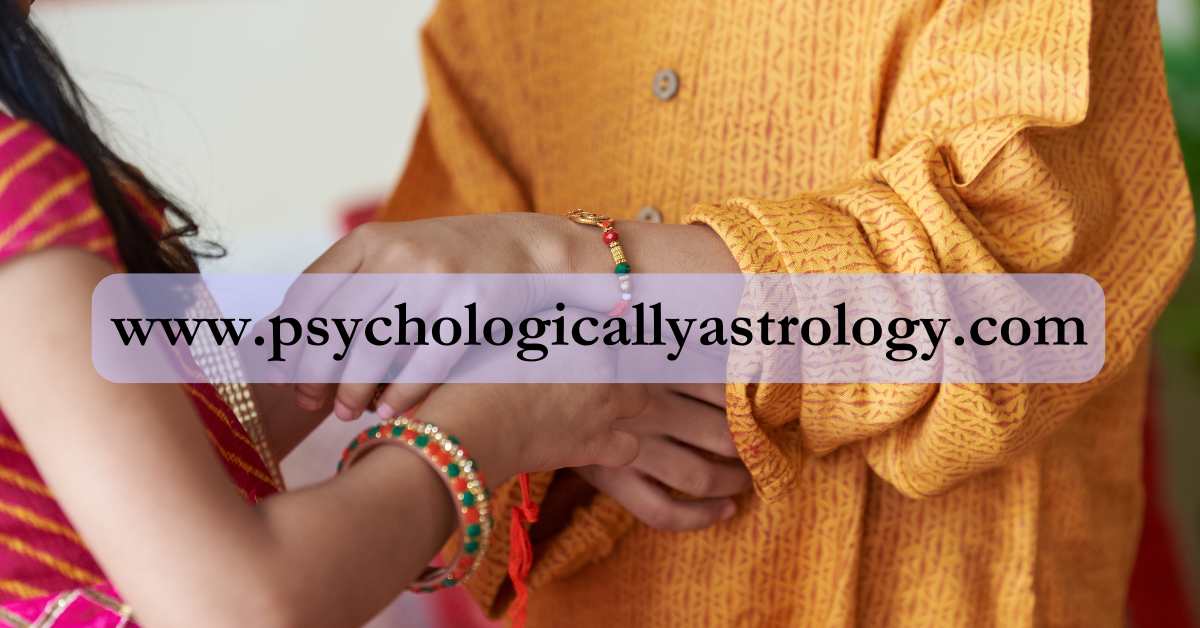
Raksha Bandhan – On this day women tie a Raksha Kavach, commonly called a ‘Rakhi’ to their brother’s wrists. The intention is that the women protect their loved ones with their spiritual power. In these modern times, there is a huge confusion on who is protecting whom. So let’s refer to our books,
- The Raksha kavach was first tied by the Indrani, Devi Sachi to her husband Indradev when he was going to war. She intends to protect her husband with the power of her intention/ spiritual strength as he goes to fight the Asur armies. And the Kavach is the symbol of her power to protect him. It is the Indrani who intends to protect Indradev and not the other way around.
- Devi Laxmi had tied a Raksha kavach to Raja Bali as a promise that she would protect him. This incident occurs during the Shri Vaman avtar.
In short. Bhagwan Vishnu is very pleased with Raja Bali’s generosity and wants to give him a boon. Raja Bali requests that Shri Vishnu always physically stay with him to protect him. Shri Vishnu agrees and goes with him to Patal-lok. But Devi Laxmi feels that Shri Vishnu should come back to his realm Vaikunth. So she goes to meet Raja Bali and asks him to release Shri Vishnu from his promise. And instead she gives him her own promise of protection. As a symbol of her power, she ties a Raksha kavach on Raja Bali’s wrist. Here the Rakhi symbolises Devi Laxmi protecting Raja Bali and not the other way round.
This incident is the origin of the mantra which we recite while tying the Raksha kavach,
“Raja Bali, the most generous and the most powerful, was tied with such a Raksha. I am tying such a Raksha on you. Or Raksha kavach never move, never move.”
येन बद्धो बली राजा दानवेन्द्रो महाबलः।
तेन त्वाम् अभिबध्नामि रक्षे मा चल मा चल॥ - After major anushthans or after major pilgrimages, etc the people participating in the puja will get a Raksha kavach tied to their wrists by the Brahmins. The Brahmin will recite this same mantra while he ties the Raksha threads. The Raksha Kavach symbolises the power of the deity channelised through the Brahmin protecting the devotee. It represents the power of the deity which protects the devotee and not the other way round.
- On this day, when a woman ties a Raksha kavach on her brother, it represents her power to protect her brother. Not the other way round as the media is trying to propagate. (There was a question on this, thus this mini-post).
If you are a woman tying the Rakhi on your brother’s wrist, then this means that you are supposed to charge it with your spiritual power and the blessings of the deity you worship. You are promising to protect your brother and not the other way round.
The Raksha kavach is a red and yellow cotton thread wrapped thrice around the right wrist and tied with three knots. Modern Rakhis are very elaborate, with decorations etc which look very attractive. But try to buy Rakhis with red and yellow coloured threads and tie it with three knots while reciting the mantra above. If you can make the Raksha kavach then it will be even more powerful. (I buy beautiful cotton threads, red, yellow, gold and then elaborately knot them together, using the mantras I know, each knot has one mantra in it. And then tie them to my son, husband, father and post them to my brothers.)
A Raksha Kavach can be tied by a spiritually evolved person or a genuine Brahmin or a man or a woman to anyone who desires protection. It is not limited to a sister tying it for her brother. The person who is tying it is doing the protecting and the one who gets it tied is the one being protected. Not the other way round.

The beauty of our Bharat and our Sanatan Dharma is that our festivals are all celebrated with the same happiness and joy all over the land. Every woman, young and old, on this day throughout our nation, east, west, north south, goes shopping to buy the most beautiful Rakhis and then ties it with intention on her loved ones. Then gets gifts in exchange. And this one day is pure happiness spent with the ones you love the most.
Either way you celebrate it with, either with Shri Vidya / Vedant or with the Samudra devata or with the Gayatri mantra or with the Raksha kavach, Shravan purnima is one of the most powerful days of the year. And everyone should try to make use of its energy.

7 responses to “Shravan Purnima, Rakhi”
Namaskaar..!! Hd one ques related to ur post..in ur post no.31 related to evil fathers u hd given example of a father sun in aries in d1 and sun shifted to libra in d9..
And in ur post no.355 exalted planets analysis..u hv stated a chart related to paramucch..
In that chart..its mentioned sun in gemini in d9..
So my ques is..for reading exalted planets we hv ur our regular chart..sun exalted in aries and deblitated in libra..
And we hv ur post number 355..which to follow..??
Or is this exalted and param ucch different theories..??
While understanding ur each post and the books i hv..(as per ur blog i hv purchased all) m trying to understand these basic concepts..
In one of ur posts related to retro planets..i deeply felt that u too may be having retro jupiter..!!
Pls beg ur pardon..!! Balak tarike mari koi bhul to maaf karjo pls..
Thanks..
Hi there
sun is exalted in the entire sign of aries but his highest point of exaltation is at 10deg aries
‘paramuccha’ is the point of highest exaltation. and for sun it is at 10deg Aries.
i hope this is clear?
and when you map this 10th deg of Aries in the navamsha, this degree falls in in a division/amsha ruled by Gemini’s
ie. if you have a sun at 10deg aries he will be in aries sign in the D1 and will be put in Gemini sign in the D9.
don’t just read so many books!
read some and test some on your sample charts.
yes, my Jupiter is retrograde
Madam ji
We keralites celebrate onam on thiruvona star on shravan month..it means the birth of vamana avathar? We celebrate the return of mahabali from patal lok to see us…since vamana avathar send him to patal lok…but recently there were so many interpretations coming and we dont know what to believ any more..eventhough there are many interpretations some people used it as a tool to ridicule the entire thing like..if parasurama is a contemporary of sree rama then how mahabali rule kerala because vamana avathar happened before that..like that. Since madamji dont hav time now pls atleast let me know where the raja bali story narrated in our puranas…may be reading it wil help or just ignore if this is a juvenile question😇..thankyou all the same…as always🙏
Hi there
Puranas have been tampered thru these 1000s of yrs.
Even the Itihas have been tampered. an entire Uttar bhag has been added to the original Valmiki Ramayan.
tampering in the Mahabharat is lesser, as it is more difficult to tamper with it. it is 99% high philosophy.
but you have to learn to pick up the core lesson and ignore the rest. develop your vivek.
eg some people read the mahabharat and comment on the social life back then. this is a secondary thing, of very little relevance. the main thing in the mahabharat is the vedant encoded in it.
In Maharashtra we too honor Bali Raja. we do it on Balipratipada the day after Diwali amavasya.
he had the sense to bow down to the Satva gun. to keep his tiny ego aside, to accept the Will. and then he got so many blessings too.
we think of the positives in everything we see/hear and try to add them in our lives.
eg we think of the small child Pralhad as a great devotee of Shri Vishnu. ever read on what happens when he grows into an adult and the Asur king? we dont bother about that. learn to differentiate between the core teaching and the secondary Information.
as far as festivals are concerned, they create a feeling of joy, gratefulness, positivity, purity etc.
do perform all the festivals that your grand-father generation would perform. do not over think.
ref Vishnu puran (and also some reference in Padma Puran i think)
Namaste Madam. Happy Rakshabandhan and (in advance happy Janmashtami). Please write on power of intention also( mentioned in this post) whenever convenient for you.
Thanks and regards
Dr Yugal Tak
Hi there
Happy wishes to you too.
The intention is covered in the mantra recited while tying the raksha. as we are using Raja Bali’s name, it automatically links to Devi Laxmi’s promise of protection.
Pranaam Madam,
I just wanted to express my deep gratitude and offer my humble namaskars as always for the precious posts, this and all the others. This knowledge portal is precious to us.
Sincere gratitude, regards and heartfelt prayers as always,